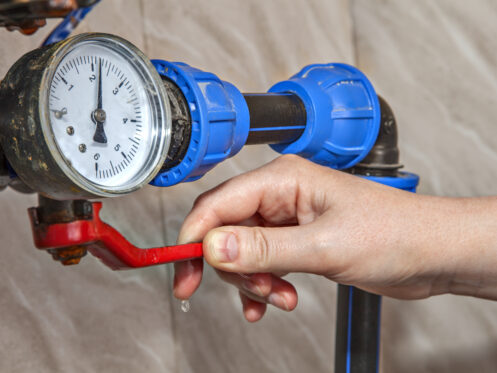
Sudden water pressure loss in a Tucson home can come from a hidden pipe leak, clogged supply line, faulty pressure regulator, partly closed valve, water heater issue, or temporary municipal supply change. The location of the pressure drop matters because a weak faucet usually indicates a fixture issue, while weak flow throughout the house can mean something larger is affecting the plumbing system. At Cal’s Plumbing in Glasgow, KY, we help homeowners identify the cause of pressure changes before a hidden leak, clogged line, or failing part causes further damage. If your water pressure drops without warning, start by checking where the weak flow is happening and whether hot, cold, or whole-home pressure is affected.
Start With Where the Pressure Drop Is Happening
A sudden pressure change is easier to understand when you notice where it shows up. If only one faucet has a weak flow, the problem may be close to that fixture. A clogged aerator, a worn cartridge, a stuck valve, or a supply line issue can make one sink feel like the whole plumbing system is struggling.
If several fixtures lose pressure at the same time, the issue may be further back in the plumbing. That can include the main supply line, pressure regulator, shut-off valve, water heater, or municipal supply. A whole-house drop needs more attention than one slow bathroom faucet. It may point to low water pressure Tucson homeowners should not ignore, especially when the change happens fast.
Hot and cold water patterns matter, too. If cold water pressure is normal but the hot water pressure is weak, the water heater or hot water line may be responsible. A water heater issue can sometimes reduce hot water pressure if sediment buildup, a partially closed valve, or a failing connection restricts flow on the hot side of the system. If both sides are weak, the problem is probably affecting the home’s incoming water or a shared part of the plumbing system.
Pipe Leaks Can Steal Pressure Before You See Water
A pipe leak can lower pressure because water leaves the line before it reaches the fixtures. The leak does not have to look dramatic at first. A steady leak behind a wall, under a slab, or in the yard can reduce flow while staying out of sight. You may notice weaker showers, slower filling appliances, or faucets that no longer feel as strong as they did a few days ago.
Other signs can show up around the pressure change. Watch for damp flooring, musty smells, warm spots on the floor, soggy soil, or a water bill that rises without a clear reason. A hidden leak can waste water every hour while the visible fixtures keep working enough to hide the problem.
Pressure loss tied to a leak usually will not improve on its own. If the water meter moves when every fixture is off, or if the pressure keeps dropping across the home, the plumbing needs a closer look. A leak left alone can damage drywall, flooring, cabinets, framing, and outdoor areas before the source becomes obvious.
Clogged Pipes Can Restrict Flow Across the House
Clogged supply pipes can cause water pressure problems, especially in older homes or homes with hard water. Mineral buildup, corrosion, sediment, and debris can narrow the pipe opening. Water still moves, but it has less room to pass through. That restriction can make showers feel weak, and fixtures take longer to fill.
Clogs in supply lines are different from drain clogs. A drain clog affects how water leaves the sink, tub, or shower. A supply restriction affects how water reaches the fixture in the first place. If the faucet runs weakly even with the handle fully open, the supply side may be part of the problem.
The location of the weak flow can help narrow it down. One fixture may have a clogged aerator or valve. Several fixtures on the same side of the house may indicate a branch line issue. Weak pressure throughout the home may point toward the main line or a larger restriction. In homes with older galvanized piping, interior corrosion can aggravate flow problems.
A Faulty Pressure Regulator Can Change Flow Fast
Some homes have a pressure regulator that controls water pressure coming from the main supply. When it works correctly, it keeps incoming pressure at a safer, steadier level for household plumbing. When it starts failing, pressure can drop suddenly or swing between too low and too high.
A bad regulator can affect the whole house at once. Showers may lose strength. Toilets may refill more slowly. Washing machines may take longer to fill. Faucets may feel weak even though the fixture remains the same. In some homes, the pressure may seem normal one moment and poor the next.
Regulator trouble can look like several separate plumbing issues at first. The common link is that the pressure change affects many fixtures. If the whole home has weak flow and no obvious leak is visible, the pressure regulator deserves attention. This is especially true if the regulator is older or the home has had pressure swings before.
Municipal Supply Changes Can Affect Your Home Too
Not every pressure drop starts inside the house. Water main work, hydrant use, nearby repairs, valve changes, or high neighborhood demand can affect pressure from the municipal side. That kind of pressure loss may show up across several homes at the same time. It may also improve once the outside work or demand changes.
Timing matters here. If pressure drops after road work, utility work, or a neighborhood water notice, the outside supply may be involved. If neighbors have the same issue, that also points away from one isolated plumbing problem inside your home.
Municipal supply changes can stir up sediment, too. After pressure returns, you may notice cloudy water, discoloration, or grit at faucet aerators. If pressure stays low after nearby work ends, your home may have a separate issue that needs attention.
Simple Checks Before Calling for Help
There are a few safe checks you can make before scheduling service. These steps can help you describe the problem clearly and may rule out a fixture-level issue. They can also help you tell whether the pressure loss is isolated or affecting the whole home.
Check whether the pressure drop affects a single fixture, one area, or the entire house. Test both hot and cold water. Look at faucet aerators for grit or buildup. Make sure the main shut-off valve is fully open. If your home has accessible fixture shut-off valves, check that they have not been bumped partly closed.
Look for signs of a leak, too. Check under sinks, around toilets, near the water heater, along exterior walls, and in the yard near the water line. Listen for running water when every fixture is off. If you have access to the water meter, see whether it moves while no water is being used. Those details can help a plumber move faster once they arrive.
Schedule Service if Pressure Stays Low
Sudden pressure loss can come from a small fixture issue, a hidden pipe leak, clogged piping, a faulty pressure regulator, or a change in the municipal supply. The problem becomes more urgent when pressure stays low, affects multiple fixtures, or causes damp areas, strange sounds, or a rising water bill.Cal’s Plumbing helps with Tucson plumbing repair, leak detection, regulator issues, clogged pipes, and other plumbing problems that affect water flow throughout the home. Call Cal’s Plumbing for Tucson plumbing repair if your water pressure remains low and you want the cause found before it becomes a larger repair.